
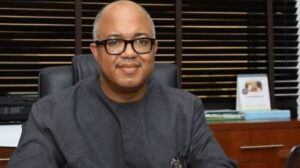
 Africa Must Take Ownership of Its Health Systems—WHO Acting Regional Director
The Acting Regional Director of the World Health Organization (WHO) Africa Region, Dr. Chikwe Ihekweazu, has called on African nations to take ownership of their healthcare systems, invest in workforce expansion, and strengthen health infrastructure to tackle emerging threats.
Dr. Ihekweazu made the call during his first official visit to Nigeria, two weeks after assuming office, underscoring the critical role Nigeria plays in shaping health interventions on the continent.
“This is the time for African countries to rise, take responsibility, and invest in their healthcare systems. WHO will continue to stand with our member states to ensure we are prepared for any health challenges that arise,” he stated.
He described Nigeria as WHO’s largest country program in Africa, adding that his visit was aimed at assessing the impact of WHO’s support and strengthening collaboration on health reforms.
“Nigeria is our biggest country office, so it was appropriate for me to come here early in my tenure to understand in more detail the great work our team is doing in support of the federal government,” Dr. Ihekweazu said.
Dr. Ihekweazu acknowledged the healthcare workforce shortage, inadequate infrastructure, and financial constraints across Africa but stressed that the continent has enormous potential.
“We have a young, vibrant population. The challenge is how the public sector absorbs many of the healthcare workers being produced to serve our people. That’s exactly where WHO helps,” he explained.
He also pointed out that global economic challenges have made donor funding less reliable, urging African governments to rethink healthcare financing strategies and take greater responsibility for their health systems.
“Many donors are facing financial constraints, and this is an opportunity for African countries to take more responsibility for the health of their people. WHO, as a member-state organization, is best placed to support this progress,” he noted.
Dr. Ihekweazu addressed the recent unknown disease outbreak in the Democratic Republic of Congo (DRC) and assured that WHO is actively working to prevent its spread.
“Every day, there are emerging health threats. In the DRC, as in every other country, national health institutions like Nigeria’s NCDC are responsible for early detection and response. WHO already has a team on the ground, and we released our initial report yesterday,” he said.
He also referenced recent outbreaks of the Sudan virus in Uganda and the Marburg virus in Tanzania, highlighting WHO’s commitment to strengthening disease surveillance and emergency response capabilities in Africa.
The WHO Acting RD cited the recent measles outbreak in the United States as a reminder of the interconnected nature of global health.
“We cannot afford to think of public health in isolation. The measles outbreak in the U.S. shows that infectious diseases do not respect borders. This is why we need a strong WHO that fosters global collaboration to prevent, detect, and respond to health threats anywhere in the world,” he emphasized.
Dr. Ihekweazu commended Nigeria for eliminating wild poliovirus in 2020 but acknowledged that variant two polio remains in circulation in some northern states.
“Polio has been a challenge for us in Nigeria. We worked very hard to eliminate wild poliovirus, and we are proud of the progress. Today, we still have variant two polio circulating in some states in the northwest,” he said.
He praised the efforts of Nigerian health workers and government officials in tackling the outbreak and assured that WHO would continue to provide technical and logistical support.
“Our role is to mobilize ourselves again and get ahead of this. I am really proud of the efforts by the Minister of Health and the governors in the affected states, and I assured them of WHO’s full support,” he added.
Dr. Ihekweazu concluded by urging African governments, international organizations, and local health institutions to forge stronger partnerships to build resilient health systems.
“Africa has the expertise, the people, and the potential to strengthen its health sector. This is the moment for every country to take ownership and invest in their healthcare systems. WHO remains committed to supporting African nations in achieving their health goals,” he affirmed.
About the Author