


By The People’s Insight
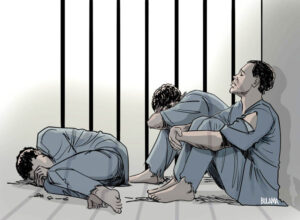
In the dark corners of Nigeria’s prison system, far away from public scrutiny, a haunting reality thrives — inmates fed with meals so deplorable, they liken it to eating worse than dogs. This revelation, though shocking, is not new. It is a recurring theme in prison reports, rights advocacy publications, and the voices of former inmates who dared to speak out.
During a recent visitation exercise to one of the correctional centers in southern Nigeria, an inmate confessed with visible agony: “Even dogs eat better than we do. Sometimes, the food smells sour before it even gets to us. It’s a daily struggle between hunger and sickness.”
This testimony echoes the findings of multiple human rights organizations, including Amnesty International and the Prisoners’ Rehabilitation and Welfare Action (PRAWA), who have documented the chronic underfunding, overcrowding, and neglect that plague Nigeria’s prison system. According to a 2023 report by PRAWA, inmates are often served watery beans, spoiled rice, or food infested with insects — with no access to clean water or decent sanitation.
The Budget vs. Reality Paradox
Curiously, Nigeria allocates billions of naira annually for prison feeding. For instance, in the 2024 budget, over ₦12 billion was earmarked for the welfare of inmates, yet reports from multiple prison facilities suggest that only a fraction of this actually benefits the prisoners. Where does the rest go? The lack of transparency in prison administration suggests systemic corruption, poor oversight, and a glaring absence of accountability.
Health Consequences and Psychological Impact
Nutrition is a basic human right. Poor diet not only weakens the body, making inmates more susceptible to disease, but also fuels mental instability and aggression. Former inmate and now prison reform advocate, Emmanuel Obasuyi, recounts: “Inmates don’t die just from disease or neglect. Many die from hopelessness — the sense that they’re less than human.”
Comparative Insight: How Other Countries Treat Inmates
Contrast this with Scandinavian prison models, where inmates are served balanced diets, given culinary training, and treated with dignity. These societies understand that the goal of incarceration is not punishment, but rehabilitation. In Nigeria, the system appears to punish even beyond the prison sentence.
The Way Forward
To change the narrative, there must be:
– Reform in prison budgeting and monitoring: Independent bodies must be empowered to audit prison spending.
– Public-private partnerships: Collaborations with NGOs and corporate organizations can improve food quality and inmate welfare.
– Legislative oversight and policy reform: Lawmakers must pay attention to the correctional service and enforce human rights standards.
When a nation treats its inmates worse than it treats its animals, it reveals a deep moral crisis. Inmates are not just convicts — they are humans, citizens, and in many cases, victims of a failed justice system. Reforming prison feeding conditions is not charity; it is justice.
About the Author