

NIGERIA is under relentless siege from fake medicines, and the latest shocking raid proves the enemy is thriving right under our noses.
In this, the National Agency for Food and Drug Administration and Control has once again exposed this national shame.
In a raid early this month, the agency uncovered massive warehouses hidden inside an uncompleted building in Apapa, Lagos, crammed with banned, fake and unregistered medicines worth over N3 billion.
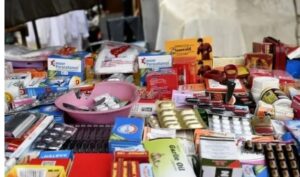
Cartons upon cartons of prohibited injectable anti-malarial products, antibiotics, sachet drugs and blister packs sat alongside assorted perfumes, body oils, and even cooking oils.
All were seized and evacuated to stop them from flooding the market. These exposures must not stop; they must intensify.
This raid is only the latest chapter in NAFDAC’s tireless crackdown on fake and substandard medications, cosmetics and beverages.
Indeed, the sheer scale of unapproved drugs and cosmetics pouring in from both local and foreign sources should alarm every Nigerian.
The World Health Organisation’s report, “Substandard and Falsified Medical Products,” delivers a damning verdict: at least one in 10 medicines in low- and middle-income countries is substandard or falsified.
These killer products, sold online or in informal markets, cost countries an estimated $30.5 billion every year. Everyone is at risk.
The WHO warns that such medicines cause treatment failure, serious health complications and death. As far back as 2017, the organisation estimated that one in ten medicines in these countries already failed basic quality tests.
The numbers from the United Nations Office on Drugs and Crime are even more horrifying. Up to 500,000 people die annually across sub-Saharan Africa from counterfeit drugs. Of these, 267,000 deaths each year are linked to substandard malaria medicines, while fake antibiotics used to treat pneumonia in children claim up to 169,000 lives yearly.
In Nigeria alone, substandard and fake antimalarial drugs kill an estimated 12,300 people every year. Treating victims of counterfeit malaria medicines drains another $12 million to $44.7 million annually from already strained health budgets.
Compounding the crisis is Nigeria’s heavy dependence on imports: about 70 per cent of medicines come from India, China, Pakistan, Egypt and Indonesia.
Add to this the flood of products from unregulated local manufacturers, and the danger multiplies.
In 2025, NAFDAC revealed that 30 per cent of drugs in open markets were fake or substandard.
Then, in March 2025, the agency seized and destroyed a staggering N1 trillion worth of confiscated drugs — including banned Analgin and lethal high-dose Tramadol (225mg) — after a sweeping operation across the notorious drug markets in Onitsha (Ogbo-Ogwu) and Aba (Ekumi/Tenant Road).
An exposé in The Lancet, titled “Curbing the circulation of counterfeit medicines in Nigeria” and authored by Omotayo Fatikun, lays bare the rotten heart of the problem.
“One major contributing factor to the prevalence of counterfeit medicines in Nigeria is the continued presence of the highly unregulated open drug markets across major cities of Nigeria, where medicines are sold in the open air on street corners, at kiosks, and at stalls,” the study found. “These markets are widely known as sources and conduits for counterfeit medicines in Nigeria and other countries.”
The study goes further: “Indeed, the open drug markets represent a major source of medicines to many licensed pharmacy outlets, hospitals, medicine wholesalers, and retailers in Nigeria. The open drug markets should be dismantled immediately. For as long as they remain operational, achieving a sustainable reduction in the circulation of counterfeit drugs in Nigeria, and perhaps the rest of sub-Saharan Africa, will be a difficult task.”
Enough is enough. The government can no longer hide behind sporadic raids and press releases.
Reactive measures have failed. The sources of these poisons must be identified, shut down and destroyed.
Properly regulated wholesale markets must replace the deadly open-air bazaars. Offenders, including importers, manufacturers and merchants alike, deserve the full weight of the law and must be met with severe, swift and strict punishment.
The well-being of Nigerians is not a favour; it is a constitutional duty. Leaders at every level must now act with the urgency this emergency demands. The merchants of death must be put out of business, permanently.
Nigerians have suffered long enough. The time for half-measures is over. The siege must end now.
About the Author