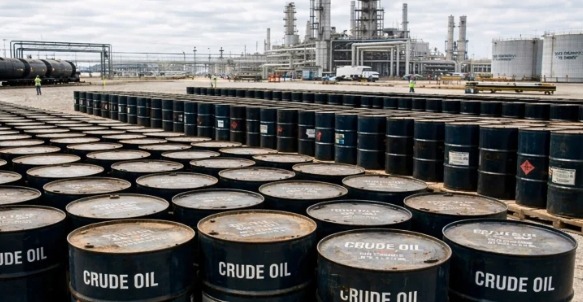

Brent crude oil price rose by 6.24 percent on Thursday to $114.08 per barrel — first time since May 2022.
US West Texas Intermediate crude rose by 0.97 percent to $96.33 a barrel.
The development followed attacks on energy facilities in the Middle East by Israel and Iran.
Iran launched missile attacks on energy facilities in Qatar and Saudi Arabia in retaliation of Israel’s strike on the country’s South Pars gas field, marking a significant escalation in the conflict involving the United States.
On Wednesday, QatarEnergy said Iranian missile attacks on Ras Laffan, the site of Qatar’s core LNG processing operations, caused “extensive damage” to its energy hub.
Saudi Arabia said it shot down four ballistic missiles headed for Riyadh on Wednesday and thwarted a drone attack on a gas facility.
Iran had previously warned of evacuations at oil facilities in Saudi Arabia, the United Arab Emirate (UAE), and Qatar, as it prepared to respond to strikes on its South Pars and Asaluyeh energy infrastructure.
South Pars is the Iranian sector of the world’s largest natural gas deposit, which Iran shares with US ally Qatar on the other side of the Gulf, called North field.
After the attacks, the United States President Donald Trump threatened to blow up the South Pars if the country continues to attack energy facilities in Qatar.
The supply disruption, triggered by the Middle East war, has affected petrol prices in Nigeria.
Dangote refinery, on March 9, said it was not immune to the global development as it secures its crude on international benchmarks.
On March 13, the refinery increased the ex-gantry price of its petrol to N1,175 per litre.
Nigeria’s crude oil production fell to 1.31 million bpd in February, according to the Organisation of Petroleum Exporting Countries (OPEC) data.
About the Author