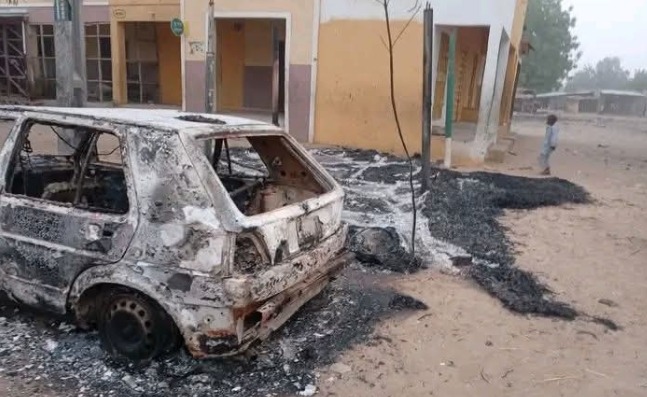
At least five people have been confirmed dead while over 1,400 homes were destroyed following a devastating windstorm that struck Gwadabawa and Kware Local Government Areas of Sokoto State on Tuesday.
According to officials of the Sokoto State Emergency Management Agency (SEMA) and the National Emergency Management Agency (NEMA), who carried out a joint on-the-spot assessment, the storm wreaked havoc on lives, homes, and public infrastructure, leaving dozens injured and thousands displaced.
“In Gwadabawa Local Government Area, the storm razed 878 houses, affecting 1,306 households and displacing over 7,800 residents. Eleven people sustained various degrees of injuries. Among the five recorded deaths were two young children, aged 18 months and three years, identified as the children of one Mansur Salihu Talhi from Marabawa community.
“The assessment team in Gwadabawa included the Deputy Project Manager, Shehu Muhammad; the Councilor representing Gidan-Kaya Ward, Hon. Siba Sodangi; community elder, Adamu Abdullahi Talhi; and SEMA Desk Officer, Nafi’u Bello.
“In Kware Local Government Area, 523 houses were destroyed, affecting 1,403 households and injuring at least 18 people. Several public institutions, including parts of the Government Secondary School Kware, suffered extensive damage, with classrooms and perimeter fences among the worst hit.
“Particularly affected areas in Kware included Kofar-Barga, where the home of a resident, Ahmad Abbas, was completely flattened. The 30-Quarters area also saw significant damage, with over 100 houses reported destroyed,” the statement read.
SEMA said it has commenced documentation of all affected persons and properties to enable both the state and federal governments to provide timely humanitarian relief to the victims.
“This is one of the most severe windstorms we have experienced in recent years,” the agency said, stressing the need for urgent intervention and enhanced disaster preparedness to mitigate the impact of future extreme weather events in rural communities.
Efforts are ongoing to provide temporary shelter and essential supplies to the displaced persons while awaiting government support.
About the Author