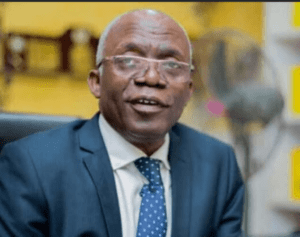
Human rights lawyer and Senior Advocate of Nigeria, Femi Falana, has challenged the Federal Government and other tiers of government to account for the additional revenue accruing to them following the removal of petrol subsidy.
Falana warned that the policy must not become another avenue for financial mismanagement, insisting that Nigerians deserve to know how the increased revenue is being spent, especially as millions continue to grapple with rising living costs.
The lawyer made the call while speaking on Channels Television’s Sunday Politics, where he questioned the justification for asking Nigerians to endure economic hardship without corresponding improvements in infrastructure and public services.
Falana cited the poor condition of a road in Ekiti State leading to Afe Babalola University as an example of what he described as the failure of government to translate increased revenue into development.
He said the affected local government reportedly received about N5.4 billion between January and May, yet a road that would cost less than N500 million to repair remained in poor condition.
“So you can’t fix a road with less than N500 million? And in any case, state governments were fixing roads, and they would then go to Abuja to ask for a refund,” he said.
Falana warned against returning to what he described as the era of the “fuel subsidy scam,” stressing that governments must be transparent about how the additional funds generated since the policy change are being utilised.
“If you say we are making more money, we don’t want to go back to the era of the fuel subsidy scam. Where are the benefits?” he asked.
He noted that Nigeria was generating more revenue from crude oil and argued that funds previously earmarked for fuel imports should have created substantial fiscal space for development.
According to him, about $10 billion previously spent annually on fuel imports could have been saved following the removal of the subsidy. However, he said much of the government’s additional revenue was being absorbed by debt servicing.
“Now, the money earmarked for fuel importation by the government—$10 billion per annum—ought to have been saved, but the bulk of this money goes for servicing of debt. That’s where the problem lies,” he said.
The lawyer urged Nigerians to take greater interest in government finances and demand accountability from public officials over how increased allocations are being spent.
“Yes, state governments are getting more money. The Federal Government is getting more money. Local governments are getting more money on paper. It is the duty of the Nigerian people now to demand accountability,” Falana said.
President Bola Tinubu announced the removal of petrol subsidy in May 2023, shortly after assuming office. The decision triggered a sharp increase in petrol prices and has remained one of the most controversial economic policies of his administration.
The Federal Government has maintained that subsidy removal was necessary to redirect resources towards development and reduce pressure on public finances.
However, critics of the policy have argued that its benefits have not sufficiently reached ordinary Nigerians, particularly amid persistent inflation and rising living costs.
The subsidy debate is also expected to feature prominently ahead of the 2027 presidential election, with former Vice President Atiku Abubakar pledging to restore the subsidy if elected, while former Anambra State governor Peter Obi has backed its removal but called for the savings to be transparently and efficiently invested.
About the Author