Former Speaker of the Delta State House of Assembly, Victor Ochei, has accused former Delta State Governor Ifeanyi Okowa of betraying their political relationship despite his alleged financial and political support for Okowa’s senatorial ambition.
Ochei, who is the Nigeria Democratic Congress (NDC) senatorial candidate for Delta North ahead of the 2027 general elections, also accused Okowa of taking over the All Progressives Congress (APC) structure in Delta State after defecting from the Peoples Democratic Party (PDP).
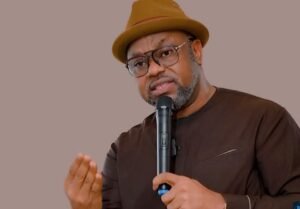
He made the allegations during an interview on Arise News on Friday, where he recounted their political relationship, the disagreements that followed and the circumstances that led to his departure from the APC.
Ochei said his relationship with Okowa dated back to their days in the PDP, claiming that he supported the former governor’s political ambition before their interests eventually clashed.
According to him, he backed Okowa’s bid for the Senate in 2011 after then-governor Emmanuel Uduaghan decided not to reappoint him as Secretary to the State Government.
He said he encouraged Okowa to pursue an elective position instead of seeking another government appointment and subsequently supported his senatorial ambition politically and financially.
Ochei, however, alleged that their relationship deteriorated during the political contest surrounding the 2015 governorship election.
He said that following the governorship primaries, he received offers to contest for the Senate or deputy governorship under the Labour Party and the APC but that Okowa advised him to join the Accord Party instead.
According to Ochei, Okowa argued that joining either of the other parties could strengthen their governorship candidates, who were from Delta Central Senatorial District, and potentially undermine his own political interests.
Ochei said he accepted the advice and joined the Accord Party, adding that both men discussed political strategies and the constituencies where he would campaign.
He maintained that they initially agreed to support each other’s ambitions, with him campaigning for Okowa and former President Goodluck Jonathan while pursuing his own senatorial ambition.
However, he alleged that Okowa later worked against his candidacy during the campaign.
“But he betrayed me right in the middle of the campaigns,” Ochei said.
He claimed that Okowa went around telling people not to vote for him because doing so would undermine the PDP’s chances of producing a senator through the Accord Party.
Ochei said he became aware of the alleged campaign against him but chose not to confront Okowa, preferring to see how events would unfold.
Ochei accuses Okowa’s camp of taking over APC structure
Beyond their earlier political disagreements, Ochei accused Okowa and his allies of taking control of the APC structure in Delta State after the former governor defected from the PDP.
He said the development altered the balance of power within the party and left longstanding members of his political camp with little influence over appointments and other political positions.
Ochei explained that he decided against seeking an elective position under the APC because he believed the party’s structure had already been taken over by politicians who joined from the PDP.
“I didn’t seek any political office in the APC because I knew it was all done and dusted for those who were coming in,” he said.
He alleged that Okowa’s allies controlled local government councils, councillorship positions and other political offices, leaving existing APC members with limited bargaining power.
“They had the local government councils, all of them were with them. All 500 councillors in the state were theirs,” he said.
Ochei added that he had expected an arrangement that would accommodate members who had built and sustained the APC before the influx of defectors.
According to him, the failure to reach such an arrangement left some party members aggrieved, while others eventually left the APC.
He said he spent 11 years in the party and remained committed to it even when it was politically unpopular.
“We were there because we believed in it regardless, just as NDC is today,” he said.
About the Author
