
 The group demanded either a cancellation and rescheduling of the affected exams or a compensatory 20% score increase for the affected candidates.
The Citizenship Civic Awareness Centre (CCAC) has said that the apology offered by the West African Examinations Council (WAEC) for conducting English language examinations at late night without light in some states across the country is not enough.
In a statement issued by the centre’s official, Adeola Soetan, the group decried the “inhuman conditions” under which students were forced to sit for the paper.
The group demanded either a cancellation and rescheduling of the affected exams or a compensatory 20% score increase for the affected candidates.
“The apology tendered by the Head of the Nigeria National Office of WAEC, Amos Dangut in respect of the midnight examinations conducted in some states is Not Enough to compensate for the losses in marks, time and comportment suffered by candidates during the midnight examinations where students were forced to write English language paper in darkness,” Soetan said.
Travel guides
The WAEC English Language paper, a key subject for secondary school leavers, was rescheduled and administered during the night following alleged security breaches and exam leakages.
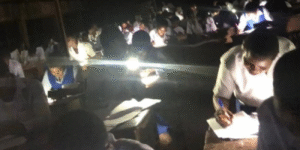
In some areas, students reportedly wrote their exams using torchlights due to the absence of electricity and proper lighting, triggering widespread public outrage and criticism of WAEC’s crisis management strategies.
ThePeoplesInsight learnt further that the examination was written at late hours in several centres in Kwara, Taraba and other northern states in the country.
A resident of Kwara, Idris Yinka, in a post on Wednesday, said, ”They brought the WAEC examination questions around 6:50 p.m. Sharing and distribution of the papers took ten minutes, and the exam started exactly at 7pm and ended at 8:25pm, according to the two secondary school students I just met at Alore Junction.”
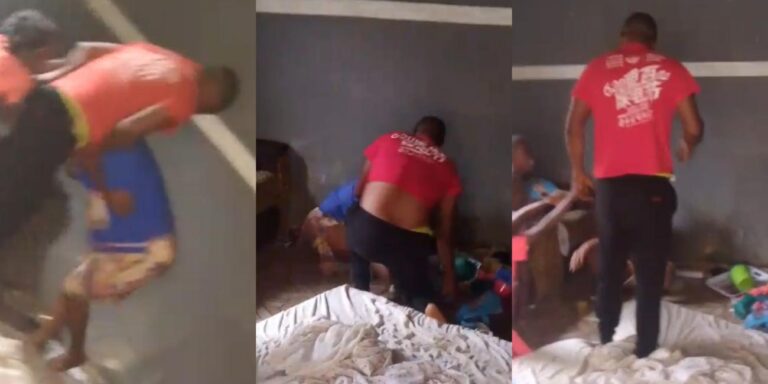
In a similar story six days ago, ThePeoplesInsight reported how students of Unity Modern School in Asaba, the Delta State capital, were forced to write one of their 2025 West African Senior School Certificate Examination (WASSCE) papers late into the night using torchlights, after a four-hour delay in the delivery of question papers.
A one-minute, 33-second video clip obtained by SaharaReporters showed a chaotic scene, with students struggling to complete their exam in total darkness due to the absence of electricity in the school.
A voice in the background is heard stating that the exam, originally scheduled for 2pm, did not begin until 6pm, causing the session to stretch late into the evening. In the footage, a man believed to be the examination supervisor is seen holding a torchlight to assist the candidates in finishing their papers.
A woman’s voice, filled with frustration over the situation, can be heard saying, “They are using torchlight to write WAEC, even during my time of lantern (when lanterns were commonly used in homes), we did not use torchlights to write WAEC.
“It’s not okay. The paper that was supposed to start by 2pm, they brought the paper by 6pm.”
The group emphasised that the welfare of students should be paramount in the administration of public examinations, asserting that the midnight examination scenario was tantamount to a systemic failure and a gross violation of basic educational rights.
“Students/candidates are the most important factor in any exam, internal or external, so they must be treated with due respect and provide a conducive environment to prepare them for their optimal performance,” Soetan stated.
“Definitely, writing an exam in the dark with one hand holding a torch and another hand with a pen to write exam is not part of a conducive environment.”
He further criticised WAEC for what he described as “ambushing” students due to the body’s own failings.
“Conducting an exam under these inhuman conditions is an ambush to unnecessarily punish the students for the alleged leakage of their examination,” Soetan argued.
“The examination should have been postponed instead of punishing students for WAEC negligence.”
He questioned the rigidity of the examination schedule, insisting that it should not take precedence over student safety and fairness.
According to him, “Nothing is sacrosanct about the examination timetable that will subject WAEC customers to suffer such indignity and security risk.”
He added, “WAEC has breached its own rule of conducting exams under a conducive environment. This is a faulty step to mass failure.”
Soetan therefore called on WAEC to immediately nullify the papers conducted under the questionable conditions and provide a fairer alternative.
He said, “In view of this, WAEC should cancel all papers conducted in such frightening conditions and reschedule the papers.
“In the event WAEC finds it difficult to conduct fresh exams for any reason, then at least a twenty percent (20%) mark should be added across board to all affected students as compensation for ambushing them.”
He also raised concerns about inequality, noting that while some students wrote their exams under standard conditions, others were subjected to harsh, improvised settings, creating a disparity in assessment outcomes.
“It’s discriminatory to have students who wrote their own papers in a conducive environment and another set of students who wrote their own papers in darkness like captives,” he lamented.
Drawing on historical context, Soetan referenced the infamous 1978 WAEC examination leakage scandal known as “Orijo ’78”, a precedent, he said, that was handled with more dignity and fairness.
“The first time the WAEC exam leaked majorly was in 1978 tagged “Orijo ’78’, and students were not subjected to the indignity of midnight exams, so why the punishment with another” Orijo” 47 years after?” he asked.
He called out what he sees as the hypocrisy of adult stakeholders who impose punishing exam conditions only to blame the youth for underperformance.
He stated, “It is shameful for “too serious” adults to conduct dangerous examinations for our youths and later deride the same youth as being “unserious” when mass failure results due to the irresponsible attitude of the “too serious” adult generation.”
“Cancel and reschedule the affected papers now,” Soetan demanded.
About the Author