


President Donald Trump has announced a major travel ban that limits who can enter the United States from certain countries, saying it is needed to keep the country safe.
This new rule, officially signed as a presidential order, will begin on June 9.
It completely stops travelers from 12 countries from entering the U.S. and places partial restrictions on people from seven other nations.
These restrictions vary and may include more intense background checks, bans on specific types of visas, or limits on certain groups of travelers such as people coming to live permanently or visit temporarily.
The decision to enforce this ban came shortly after a violent attack in Boulder, Colorado, which raised concerns across the country about safety and terrorism.
Although the attacker has not been directly connected to any foreign group, the event put pressure on the government to take quick action on security issues.
The White House says the main goal of the travel ban is to protect Americans by making sure people coming into the country are properly screened and that their home countries share enough information with U.S. authorities to confirm their identities and backgrounds.
However, the decision has received mixed reactions. Critics argue that the ban unfairly targets countries with mostly Muslim populations and may damage relationships between the U.S. and other nations.
On the other hand, supporters believe that the ban is necessary to strengthen national security and prevent possible threats from entering the country.
The countries with Full Ban are:
1. Somalia
2. Sudan
3. Chad
4. Eritrea
5. Libya
6. Congo (Brazzaville)
7. Equatorial Guinea
Countries with Partial Ban
1. Burundi
2. Sierra Leone
3. Togo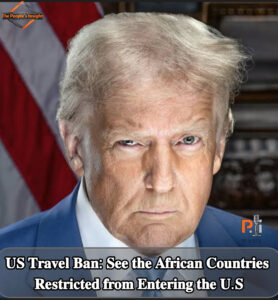
About the Author