
A great number of Ndokwa Youths took to the street on Monday to protest against the blackout menace that has plagued the community for long.
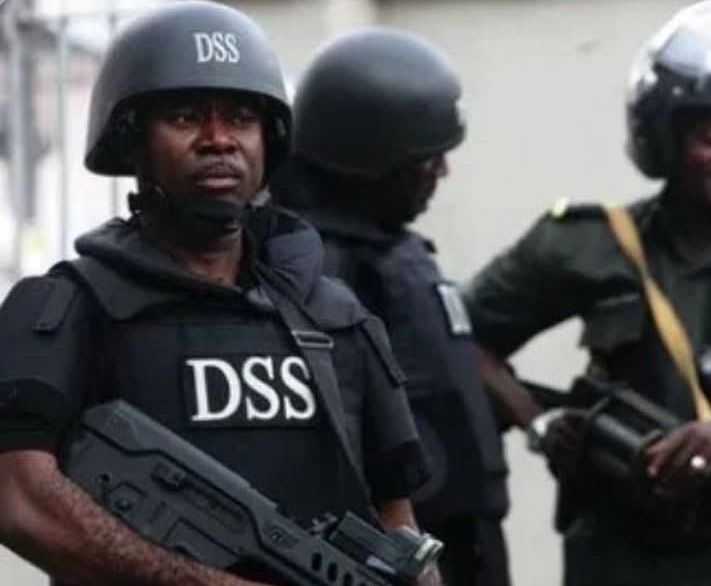
While the protest was ongoing, security operatives were said to have shit teargas into the air, disrupting the ongoing activity and sending many of them scampering foe safety.
The reported use of tear gas by police in Delta State, southern Nigeria, to disperse peaceful demonstrators is a clear violation of constitutionally guaranteed rights to freedom of expression and peaceful assembly.
The People’s Insight noted that hundreds of residents, young people, older men, and women from the Ndokwa region barricaded the Kwale axis of the Ughelli-Asaba expressway on Monday in protest against over 16 years of electricity deprivation.
Eyewitness accounts that protesters carried placards with slogans such as “Light Up Ndokwa Nation,” “Electricity in Ndokwa Land: Enough is Enough,” and “NEPA No, IPP Yes.” They were protesting the longstanding power blackout despite living in close proximity to the Okpai Independent Power Plant, which generates electricity for at least nine other Nigerian states.
At approximately 9:00 a.m., law enforcement officers reportedly fired tear gas to disperse the demonstrators, despite the protest being peaceful and nonviolent. The crowd later regrouped and continued their protest, underscoring the community’s resilience and determination.
The use of force against unarmed citizens advocating for their basic rights is both inhumane and unconstitutional. These individuals are not criminals, they are Nigerian citizens seeking justice after enduring years of neglect and socio-economic marginalization.
The Okpai plant symbolizes an irony that many in Ndokwa find intolerable: generating power for other regions while their own homes remain in darkness.
Foe years, the sidents of Ndokwa have had to rely on expensive fuel-powered generators for basic electricity needs, despite living adjacent to a major power-generating facility. Their frustration, after nearly two decades of exclusion from a basic utility, is entirely valid.
This situation starkly contradicts the Nigerian Constitution. Section 14(2)(b) declares that “the security and welfare of the people shall be the primary purpose of government.” Similarly, Section 17(3)(a) mandates that government policy should ensure all citizens have the opportunity to secure adequate means of livelihood, electricity access directly affects.
Furthermore, Sections 39 and 40 of the Constitution guarantee the rights to freedom of expression and peaceful assembly. Denying these rights, particularly when the subject of protest is the denial of essential services, adds another layer of injustice.
Electricity is more than a luxury; it is a necessity for education, healthcare, economic productivity, and overall quality of life. Prolonged darkness in a power-producing community like Ndokwa is not just neglect but a systemic inequality.
About the Author