
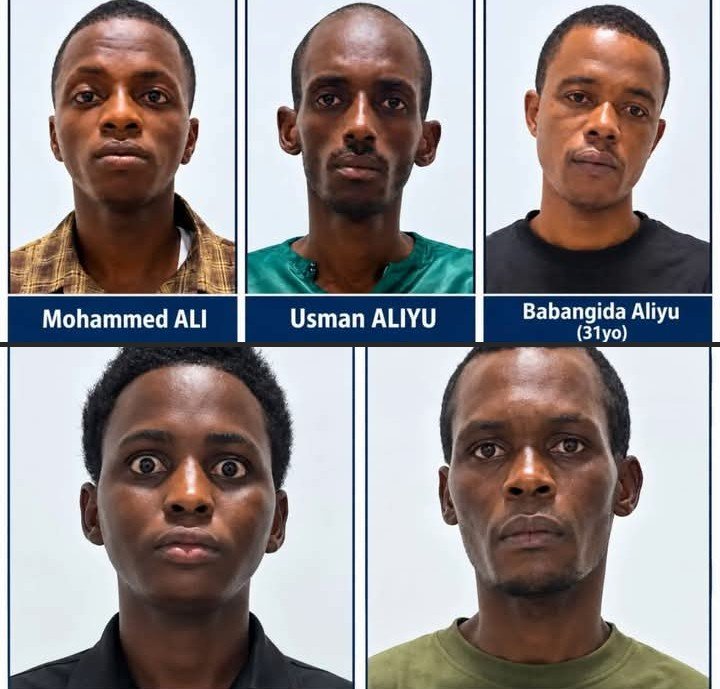
A Kenyan court has convicted self-proclaimed pastor Paul Mackenzie and 28 other defendants for the murder of 191 people, including 190 children, in a religious cult linked to mass deaths in Shakahola Forest.
The convictions followed a lengthy trial over the deaths of followers of Mackenzie’s Good News International Ministries, who were allegedly directed to starve themselves and their children to death in a bid to “meet Jesus”.
The defendants had pleaded not guilty, maintaining that nobody was forced to die.
Delivering the judgment on Monday, October 19, 2026, Justice Diana Kavedza Mochache ruled that the prosecution had proved its case against all 29 defendants.
The court found that religious teachings and an organised system of control were used to enforce deadly fasting among the followers.
One of the co-accused had testified that Mackenzie instructed his followers to use violence against anyone who refused to fast, including forcing them to comply through kicks and blows.
The judge also heard accounts of how burials in the forest were described as “weddings”, with dead followers reportedly celebrated as having united with Jesus.
The case attracted international attention in 2023 after authorities began recovering bodies from shallow graves in Shakahola Forest, near the coastal town of Malindi.
More than 400 bodies have since been recovered from the area, although Monday’s judgment concerned 191 murder counts. Many of the victims remain unidentified because of the condition of their remains.
Seventeen men were reportedly recruited from a nearby community to exhume graves during the recovery operation. Some said they discovered several bodies in individual graves, including infants and young children.
One gravedigger recounted finding 12 children buried in a single grave, while others described discovering victims whose hands and legs had been tied and whose bodies were wrapped in bedsheets.
Mackenzie founded Good News International Ministries in 2003, building a following through church branches across Kenya.
His teachings reportedly discouraged formal education and medical treatment, portraying them as contrary to religious doctrine. The church also operated a television station that broadcast his sermons from Malindi.
After the church’s main branch closed in 2019, Mackenzie moved to Shakahola Forest and encouraged followers to join him there.
Among those who relocated was Peter Shukrani, who had attended the church since childhood and regarded Mackenzie as his spiritual father.
Shukrani said he became seriously ill in the forest after his mother discarded his medication because of the pastor’s teachings against medical treatment.
He was eventually rescued after spending weeks bedridden and later said he believed he would have died without intervention.
Despite his experience, Shukrani continued to defend Mackenzie, insisting that followers had chosen to fast because of their beliefs.
However, Mackenzie’s son, Dan Paul Mackenzie, argued before the verdict that his father should be held responsible because of the authority he exercised over the followers.
The Shakahola tragedy has raised serious questions about the regulation of religious organisations and the protection of vulnerable people in Kenya.
Mackenzie and his co-defendants are expected to be sentenced on November 6, 2026. The pastor also faces separate legal proceedings relating to other alleged offences connected to the wider Shakahola tragedy.
About the Author