
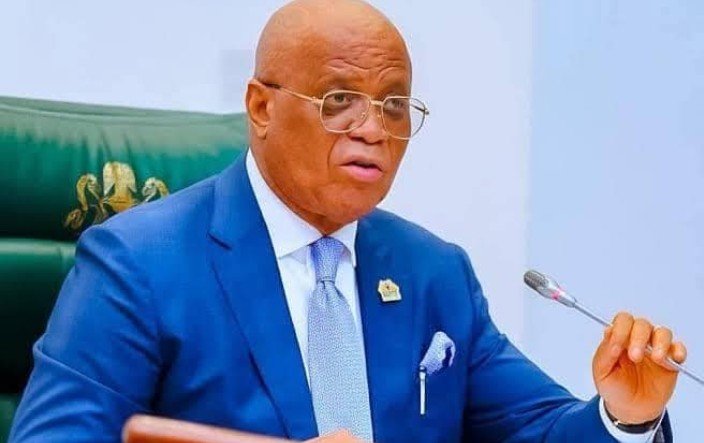

The House of Representatives has called on the Federal Ministry of Education to reinstate Biology as a core and compulsory subject for senior secondary school students, warning that its exclusion from the compulsory subject list could weaken science education in Nigeria.
The resolution followed the adoption of a motion sponsored by Ibrahim Isiaka, a lawmaker representing Ogun State, during plenary on Wednesday.
The motion sought a review of the ministry’s circular of September 8, 2025, issued through the Nigerian Educational Research and Development Council, NERDC, outlining approved subjects for basic and senior secondary education.
Presenting the motion, Isiaka expressed concern that Biology was no longer listed among the compulsory core subjects for senior secondary school students under the revised curriculum.
He argued that the subject remained essential to students’ understanding of the human body, plants, animals and other living organisms, as well as their relationship with the environment.
The lawmaker warned that removing Biology from the list of compulsory subjects could limit students’ access to scientific knowledge relevant to healthcare, agriculture, environmental protection and other critical fields.
He maintained that Biology had traditionally played a central role in Nigeria’s secondary school science curriculum and was important for preparing students for further studies in medicine, nursing, pharmacy, agriculture and biological sciences.
The House also highlighted the importance of biological research and scientific experiments to global advancement, including research conducted aboard the International Space Station and missions exploring the Moon and Mars.
Consequently, the lawmakers urged the Federal Ministry of Education to review the revised curriculum and restore Biology as a core and compulsory subject at the senior secondary school level.
Beyond Biology, the House called for the introduction of Spanish, German, Chinese and Russian into Nigeria’s school curriculum to strengthen students’ language skills and improve the country’s capacity to engage in international scientific, economic and diplomatic activities.
The lawmakers also urged the ministry to establish appropriate arrangements for recruiting and training qualified teachers to teach the proposed foreign languages at basic and senior secondary school levels.
They said expanding the pool of language teachers and interpreters would help address the shortage of professionals needed to facilitate communication during Nigeria’s international engagements.
To follow up on the resolutions, the House mandated its relevant committees on Basic Education and Services, Alternative Education, and Basic Examination Bodies to liaise with the ministry and report back within four weeks for further legislative action.
The call comes amid the implementation of Nigeria’s revised education curriculum, introduced to reduce subject overload and refocus learning on core areas and practical skills.
Biology remains an approved subject under the revised curriculum, but it is no longer classified among the compulsory core subjects for senior secondary school students.
The restoration of Biology to the compulsory list will depend on further action by the Federal Ministry of Education and the relevant curriculum review process.
About the Author