


Former Chief of Army Staff, Lt. Gen. Tukur Yusufu Buratai (retd.), has urged Nigerians to unite in defending the country’s sovereignty, dignity and international reputation amid a legal battle in the United States over the possible release of documents allegedly linked to historical drug-trafficking investigations involving President Bola Ahmed Tinubu.
Buratai made the call in a position paper titled “Nigeria First: A Case for Protecting National Sovereignty and Dignity — A Patriotic and Non-Partisan Perspective.”
He argued that the controversy should not be treated solely as a personal matter involving Tinubu, but as an issue with wider implications for Nigeria and its citizens.
The intervention comes as a US District Court for the District of Columbia considers the release of records relating to allegations dating back more than three decades.
Buratai maintained that Nigerians should be concerned about the possible impact of the controversy on the country’s international image, saying ordinary citizens could suffer reputational consequences despite having no connection to the allegations.
“This is not merely about Bola Tinubu—it is about 250 million Nigerians whose national pride, economic prospects, and global standing hang in the balance,” he said.
The retired general stressed that his position was not about defending Tinubu as an individual, but about protecting Nigeria’s interests.
“We are not protecting Tinubu; we are protecting ourselves,” Buratai said, citing Nigerian students, professionals, entrepreneurs and businesses that could potentially be affected by negative perceptions of the country.
He also questioned whether allegations dating back about 33 years should continue to define Tinubu or Nigeria, arguing that the President’s subsequent political career and public service should also be considered.
“Can any Nigerian honestly claim that they are the same person they were 33 years ago?” he asked.
Buratai’s strongest concern, however, centred on national sovereignty. He questioned whether a foreign judicial process should determine the public reputation of Nigeria’s sitting president.
“We did not elect an American court to vet our leaders. We did not ask the FBI to determine the character of our president. We have our own processes, our own institutions, and our own standards,” he stated.
While acknowledging that public officials should remain accountable, Buratai said such accountability must be pursued through appropriate institutions and legal processes that respect Nigeria’s sovereignty and dignity.
He further warned that prolonged international controversy surrounding the presidency could affect investor confidence, international business relations, tourism, diaspora engagement and Nigerian companies operating abroad.
Buratai also raised concerns about the timing of the controversy ahead of the 2027 presidential election, arguing that the release of sensitive information concerning an incumbent president could influence Nigeria’s political environment.
He urged Nigerians to resist political divisions over the matter and approach it from a national-interest perspective.
“This is not about defending Tinubu the individual; it is about defending Nigeria,” he said.
Buratai proposed a seven-point response, including diplomatic engagement between Nigeria and the United States, vigorous legal representation for the President, national solidarity, public education, engagement with Nigerians in the diaspora, preparation for possible disclosure and strengthening of Nigerian accountability institutions.
He also called for a communication strategy to respond to any eventual release of the documents.
Buratai said Nigerians should defend the country’s image and sovereignty without abandoning accountability.
“Nigerians must resist this not because we blindly support any leader but because we love our nation,” he said.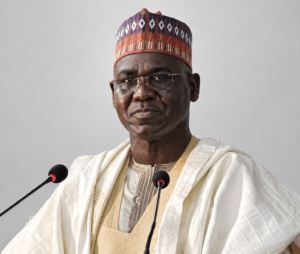
About the Author