
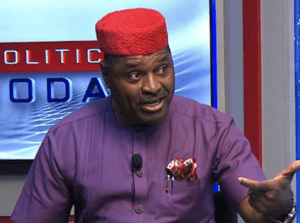
Kenneth Okonkwo, spokesperson for the 2027 presidential campaign of former Vice-President Atiku Abubakar, has criticised President Bola Tinubu over his comments on Atiku’s proposal to restore petrol subsidy if elected president.
Okonkwo said Tinubu misunderstood the proposal, stressing that Atiku’s plan is designed to make petrol more affordable for Nigerians and does not seek a return to the subsidy regime of the past.
Speaking on Channels Television’s Sunday Politics, Okonkwo said Atiku’s proposed Atiku Fuel Affordability Plan (AFAP) would focus on ensuring that local refineries have access to crude oil at fair prices, thereby reducing production costs and making petrol cheaper.
“The whole idea of the Atiku plan is affordability of fuel to the ordinary Nigerian,” he said.
Okonkwo described Tinubu’s criticism of the proposal as evidence of what he called the president’s ignorance of Atiku’s plan. He also cited the controversy surrounding the alleged fake Presidential Foreign Intervention Promotion Council as an example of what he described as shortcomings in the administration.
Atiku had recently said he would restore petrol subsidy if elected in 2027, arguing that the Tinubu administration had failed to account for funds saved from the removal of the subsidy.
Tinubu subsequently described the proposal as evidence of “serious ignorance of governance and economy,” noting that some states struggled to pay salaries and pensions before he assumed office.
However, Okonkwo argued that Atiku was not proposing a return to the old subsidy system, which he said was characterised by fuel imports, inflated figures and corruption.
According to him, the previous system allowed importers to inflate the volume and cost of imported petrol, leaving Nigerians to bear the additional cost.
“Atiku is not going back to that and cannot even go back to that,” he said.
Okonkwo further argued that Nigeria would not have needed petrol subsidy if successive governments had ensured adequate fuel supply and encouraged competition in the downstream oil sector.
He said Atiku’s plan would instead leverage Nigeria’s local refining capacity by ensuring refineries receive crude oil at affordable prices.
He also accused the Tinubu administration of failing to provide adequate crude oil to the Dangote Refinery, arguing that this had contributed to the refinery’s high production costs.
Okonkwo said the economic hardship Nigerians are experiencing is largely driven by high production costs rather than demand-pull inflation.
“What we are suffering today is not demand-pull inflation. It’s cost-of-production-induced inflation,” he said.
He added that Dangote Refinery’s reliance on imported crude had also contributed to the high cost of producing petrol.
About the Author