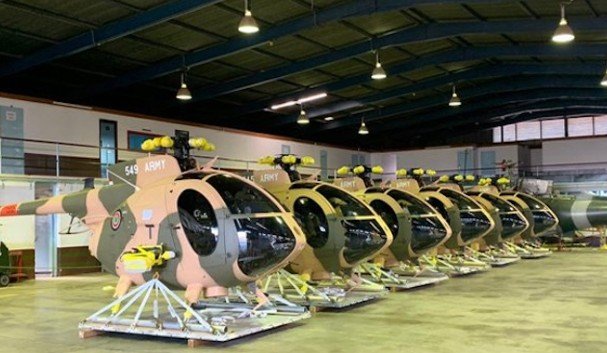

The European Union has pledged €20 million in defence assistance to Nigeria’s Armed Forces as the Federal Government prepares to receive 10 attack helicopters, unmanned aerial vehicles and other military equipment to strengthen operations against terrorism and insecurity.
The proposed assistance will be provided under the EU’s European Peace Facility, following discussions between the EU Ambassador to Nigeria and the Economic Community of West African States, Gautier Mignot, and the Minister of Defence, General Christopher Musa (retd.), in Abuja.
The development was disclosed in a statement by Leah Katung-Babatunde, Special Assistant on Media to the Minister of Defence, after Mignot’s working visit to the minister at Ship House, Abuja.
According to the statement, the meeting focused on arrangements for delivering the €20 million support package, as well as existing bilateral defence agreements and efforts to strengthen security cooperation between Nigeria and the EU.
Mignot commended the Nigerian government’s efforts to address the country’s security challenges and invited Musa to a meeting of defence ministers scheduled to hold in Brussels later in the year.
The EU ambassador also disclosed that a technical delegation would visit Abuja in November to agree on the details of the assistance.
Responding, Musa expressed appreciation for the EU’s continued support and reaffirmed the Federal Government’s commitment to protecting lives and property and promoting national development.
The minister said relative peace was gradually returning to parts of the country through the efforts of the Armed Forces and other security agencies.
However, he acknowledged that kidnapping along major highways and attacks on isolated communities remained significant security concerns.
Musa said Nigeria was expecting the delivery of 10 attack helicopters, unmanned aerial vehicles and other critical military equipment, with support from President Bola Tinubu’s administration.
He also identified the shrinking Lake Chad Basin as a potential source of instability, noting that more than 50 million people depend on the basin for their livelihoods.
According to him, denying terrorists access to their hideouts on the islands of Lake Chad remains a major operational priority for the Multinational Joint Task Force, which coordinates regional efforts against insurgent groups.
The minister further stressed the need for Nigeria’s Disarmament, Demobilisation and Reintegration programme to prioritise victims of the conflict, including military personnel affected by the violence.
About the Author
