
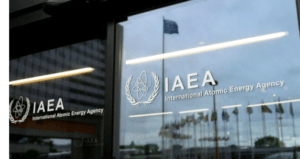
Iran’s nuclear chief, Mohammad Eslami, was prevented from attending the annual conference of the International Atomic Energy Agency in Vienna on Monday after a request for an exemption from his United Nations travel ban was rejected.
The development has triggered a diplomatic dispute between Iran, Austria and the United States, with Tehran accusing Washington of pressuring Austria to block Eslami’s participation.
US Energy Secretary Chris Wright confirmed that Washington had opposed Eslami’s attendance, saying he was a sanctioned individual and should not be allowed to evade the sanctions.
According to Wright, Eslami had requested a waiver of the sanctions, but the request was denied.
Iranian state television reported that Eslami and his delegation travelled to Vienna on Saturday but were prevented from entering Austria because of what Tehran described as US obstruction.
A senior Iranian nuclear official, Behrouz Kamalvandi, accused the United States of using “bullying political pressure”, warning that the decision could set a precedent affecting other countries.
Austria’s Foreign Ministry said it had requested an exemption for Eslami, who is subject to a UN travel ban, but the request was rejected by the relevant UN sanctions committee because there was no consensus.
Tehran subsequently summoned Austria’s chargé d’affaires over the decision.
Iranian Foreign Ministry spokesman Esmail Baghaei described Austria’s refusal to allow the delegation into the country as unjustified, while insisting that the incident occurred under American pressure.
Eslami was expected to represent Iran at the IAEA’s annual General Conference, which runs until Friday. He attended last year’s meeting and delivered a speech on behalf of Iran.
The dispute comes amid heightened tensions over Iran’s nuclear programme. Western powers have repeatedly raised concerns about Tehran’s nuclear activities, while Iran maintains that its programme is peaceful and denies seeking nuclear weapons.
About the Author