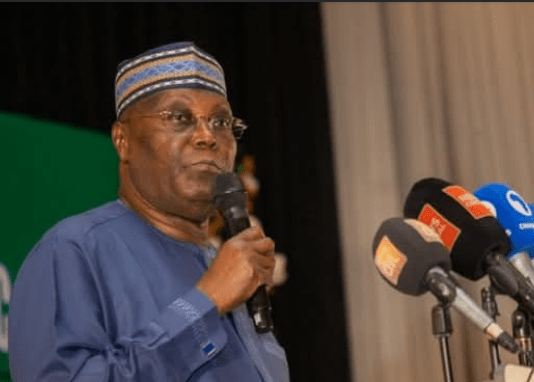
Former Vice President and African Democratic Congress presidential candidate, Atiku Abubakar, has criticised President Bola Tinubu’s economic policies, alleging that rising fuel and living costs have forced many Nigerian families to make difficult choices between food, transportation and other basic needs.
Atiku made the claim in a statement issued on Friday by the Director of Strategic Communication of the ADC Presidential Campaign Council, Phrank Shaibu.
He said the economic difficulties confronting Nigerians were inconsistent with the prosperity highlighted by Tinubu in his Independence Day address.
According to Atiku, families are struggling to afford transportation, food and other necessities, with some allegedly skipping meals and struggling to make ends meet.
He also criticised the removal of the petrol subsidy, arguing that higher fuel prices have contributed to increased transportation costs and the rising cost of moving goods to markets.
“When petrol becomes more expensive, transport becomes more expensive. When transport costs rise, food and other essentials cost more. The hardship follows Nigerians from the filling station to the market and into their homes,” Atiku said.
The ADC candidate contrasted Nigeria’s approach with Germany’s decision to reduce gasoline and diesel taxes by €0.17 per litre from October to December as part of measures aimed at easing pressure on consumers.
Atiku said the development demonstrated that governments could intervene when fuel costs put pressure on households.
“Germany understands that when fuel prices put families under pressure, government must act. Nigerians deserve the same compassion and urgency,” he said.
He proposed restoring targeted government support for fuel refined in Nigeria, saying the programme would be strictly audited and designed to ensure that the benefit translates into lower pump prices.
According to him, the proposed support would apply only to domestically refined fuel and would be funded by cutting government waste, while measures would be introduced to prevent diversion and price manipulation.
Atiku maintained that lower fuel prices could reduce transportation costs, make goods more affordable and leave families with more money to meet their needs.
He also expressed sympathy for Nigerians struggling with the cost-of-living pressures, saying they did not deserve the level of hardship he attributed to the current economic policies.
“Tinubu made life unbearably expensive and called your suffering the price of reform. I will make life affordable again,” Atiku said.
He added that his proposed economic approach would focus on domestic production, job creation and measures aimed at reducing the financial burden on Nigerian households.
About the Author