
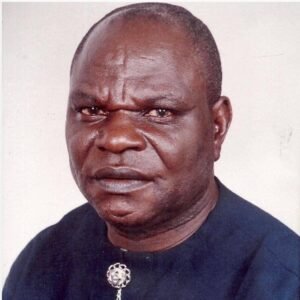
Former Senate Chief Whip, Senator Emmanuel Ibok Essien, has called for an increase in the derivation allocation to oil-producing states from 13 per cent to 25 per cent, while questioning former President Olusegun Obasanjo’s renewed support for a higher revenue share.
Ibok Essien said the Niger Delta had long demanded a fairer share of the revenue generated from its natural resources, accusing Obasanjo of failing to support an increase during his eight-year administration.
The former senator, who represented Akwa Ibom North-West in the Senate during Obasanjo’s presidency, expressed surprise at the former president’s recent position, noting that he had previously opposed efforts to raise the derivation percentage.
Speaking during an interview on Arise TV, Ibok Essien recalled that delegates from the Niger Delta demanded a 25 per cent derivation allocation at the Political Reform Conference convened by Obasanjo. However, the conference recommended 17 per cent, a proposal that was never implemented.
He questioned why Obasanjo, who left office in 2007, was now advocating a review of the arrangement after years of resistance to similar demands.
Although he welcomed the former president’s latest remarks, Ibok Essien said he remained uncertain about the sincerity of the position, given the failure to implement the earlier recommendation.
The former national chairman of the Pan Niger Delta Forum also recalled that efforts were made during his service at the Revenue Mobilisation, Allocation and Fiscal Commission (RMAFC) to increase the derivation allocation from 13 per cent to 15 per cent.
According to him, the proposal failed to materialise because of opposition, which he described as politically motivated.
Ibok Essien urged RMAFC to review the revenue allocation formula and recommend a 25 per cent derivation share, arguing that the current arrangement does not adequately address the environmental and economic challenges facing oil-producing communities.
He cited oil pollution, ecological destruction and persistent hardship across the Niger Delta as reasons for increasing the funds available to resource-producing states.
“The suffering in the Niger Delta region is too much. Funds accrued to the region are inadequate to tackle the scale of environmental damage and hardship experienced by the people,” he said.
The former senator maintained that the principle of derivation should not be restricted to petroleum-producing states, arguing that other parts of the country with significant mineral resources should also benefit from a fairer revenue-sharing arrangement.
He cited gold deposits in Zamfara State, feldspar in Kogi State and limestone deposits in Ogun State as examples of natural resources that could qualify other states for greater consideration under a broader derivation framework.
Ibok Essien called on RMAFC, the National Assembly and other relevant authorities to support the proposed increase, insisting that communities whose resources generate national wealth deserve a greater share of the proceeds.
The 13 per cent derivation allocation remains the existing constitutional benchmark for revenue accruing to the Federation Account from natural resources in relevant states. Any change would require the applicable constitutional and legal processes.
The renewed debate follows Obasanjo’s recent remarks that oil-producing states and communities have not received a fair deal and that the existing 13 per cent allocation should be treated as a starting point for further negotiations.
About the Author
