Fresh diplomatic tensions have emerged between Ghana and South Africa after the Ghanaian government declined to host South African President Cyril Ramaphosa for a planned state visit, citing concerns over the reported killing of a Ghanaian citizen and alleged xenophobic attacks against its nationals.
The decision follows the death of 40-year-old Bashiru Isak, whom Ghana says was killed during demonstrations associated with renewed attacks on foreign nationals in South Africa on June 30, 2026.
Officials in Accra said the postponement of the visit reflects Ghana’s growing concern over the security of its citizens residing in South Africa.
They maintained that ensuring the safety of Ghanaians abroad must take precedence over high-level diplomatic engagements.
President Ramaphosa had been expected in Ghana during the first week of August for a state visit aimed at reinforcing the longstanding relationship between both countries.
The visit was also expected to provide an opportunity for discussions on bilateral cooperation and concerns surrounding attacks on foreign nationals.
However, Ghanaian authorities indicated that the prevailing situation made it difficult to proceed with the visit until issues surrounding the reported killing and the welfare of Ghanaian citizens were adequately addressed.
As part of its response, the Ghanaian government has formally protested to South African authorities over Isak’s death and expressed broader concerns about the safety of Ghanaians living in the country.
According to Ghanaian officials, Isak was shot dead during what they described as “anti-immigrant demonstrations linked to ongoing xenophobic attacks” in Cape Town’s Khayelitsha township.
South Africa has rejected that account, insisting that Ghana’s claims are inaccurate.
Authorities in Pretoria said no fatalities were recorded during the June 30 demonstrations, which attracted thousands of protesters in different parts of the country.
South Africa’s Justice Minister, Mmamoloko Kubayi, accused Ghanaian authorities of circulating incorrect information capable of damaging South Africa’s reputation.
“It is concerning that Ghanaian authorities continue to communicate false information about South Africa regarding developments on irregular migration,” she said in a statement.
“The spread of false information to perpetuate the false narrative that South Africa is xenophobic is unacceptable,” she added.
The disagreement has placed renewed attention on the safety of African migrants in South Africa, where previous incidents of violence against foreign nationals have repeatedly drawn concern from governments across the continent.
Although the latest dispute has strained relations, Ghana and South Africa remain two of Africa’s closest diplomatic and economic partners, with cooperation spanning trade, investment, regional integration and continental affairs. Officials from both countries are expected to continue diplomatic engagements as efforts are made to resolve the disagreement and preserve their longstanding bilateral ties.
Previously, SaharaReporters reported that South African government fired back at Ghana, accusing the Ghanaian government of spreading false information by linking the fatal shooting of a Ghanaian national to the anti-immigrant demonstrations.
SaharaReporters earlier reported that the Ghanaian government petitioned the African Union (AU) over the killing of one of its citizens, a 40-year-old fashion designer, Mr. Bashiru Isak, who was allegedly shot dead during anti-immigrant violence in Khayelitsha, Cape Town, South Africa.
The Ghanaian government described the incident as a senseless act of xenophobic brutality.
In a statement issued last Wednesday by Ghana’s Ministry of Foreign Affairs, the government said it received the news of Isak’s death with “profound shock and sadness,” noting that he was killed on Monday, June 30, during demonstrations linked to the latest wave of xenophobic attacks targeting foreign nationals in South Africa.
The ministry condemned what it described as the growing tide of xenophobia against African migrants, insisting that those responsible for the killing must be identified, arrested and prosecuted without delay. 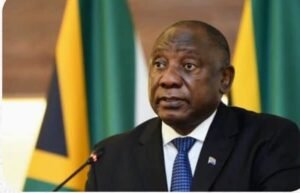
About the Author