

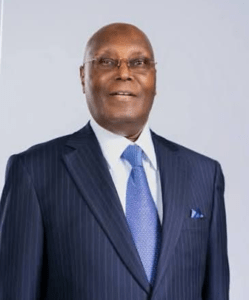
Former Vice President and 2027 presidential candidate of the African Democratic Congress (ADC), Atiku Abubakar, has challenged the reported position of the United States Federal Bureau of Investigation (FBI) that releasing records concerning President Bola Tinubu could endanger lives.
Atiku argued that Nigerians are already facing severe threats to their lives and livelihoods, pointing to insecurity, rising living costs and difficulties accessing basic necessities under the current administration.
He maintained that since Tinubu assumed office in May 2023, economic policies introduced by the government have placed significant pressure on ordinary Nigerians, particularly through the removal of the petrol subsidy.
According to Atiku, insecurity caused by terrorists and bandits has claimed many lives, while economic hardship has left other Nigerians struggling to afford food, healthcare, transportation and other essentials.
He questioned whose safety the FBI was seeking to protect by withholding the records, insisting that the hardship experienced by Nigerians represents a more immediate danger to human life.
Atiku said families that previously managed several meals a day are increasingly struggling to put food on the table, while parents face difficulties paying medical bills and purchasing medicines for their children.
He also criticised the impact of rising transportation and energy costs on households and businesses, arguing that increases in fuel prices have consequences across the economy.
The ADC presidential candidate reiterated his commitment to restoring a form of fuel subsidy if elected president, saying the policy would be targeted and subject to transparent financing, spending limits and independent auditing.
He argued that lower and more predictable fuel costs would help reduce transportation expenses, food prices and production costs while easing pressure on households and businesses.
Atiku further stated that his call for the disclosure of information held by US law enforcement agencies should not be interpreted as an attempt to interfere in Nigeria’s political affairs.
Rather, he described the demand as a democratic and humanitarian appeal for access to information that he believes Nigerians are entitled to concerning individuals who wield significant political power over their lives.
He maintained that transparency and access to relevant information remain essential to democratic accountability, particularly as Nigeria approaches the 2027 general elections.
About the Author