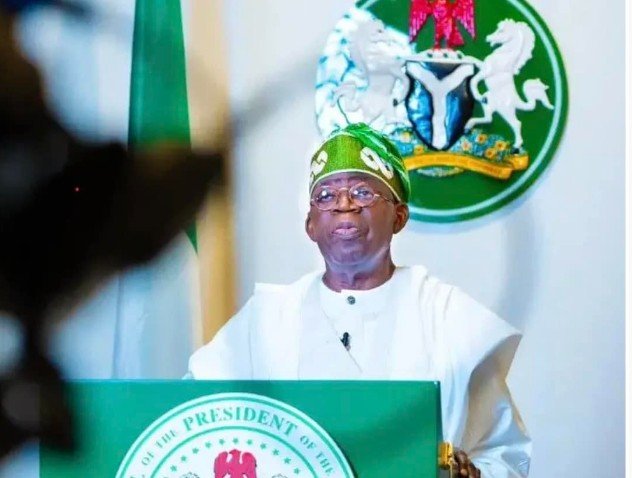
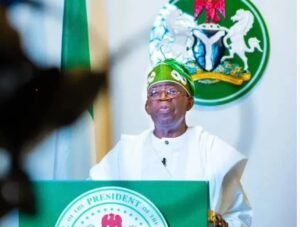
President Bola Tinubu has declared that Nigeria has moved beyond the most difficult phase of his administration’s economic reforms, saying the country is now entering a new era focused on prosperity.
Tinubu made the declaration in his Independence Day address to Nigerians on Thursday, October 1, 2026, as the country marked its 66th anniversary.
The President said his administration had taken difficult decisions to address what he described as longstanding weaknesses in the economy, insisting that Nigeria had reached a turning point.
“Nigeria has corrected its course. We have passed through our own Red Sea. This is not the time to look back,” Tinubu said.
According to him, the government’s priority would now shift from economic stabilisation to improving the living conditions of Nigerians through lower production costs, job creation and increased economic opportunities.
“The age of reform has done its work. Now begins the age of prosperity,” he declared.
Tinubu said the next phase would focus on making food and transportation more affordable while supporting farmers, manufacturers and businesses.
He said the government would expand mechanised farming, irrigation, storage and transportation infrastructure while continuing to develop roads, railways and ports to connect producers with markets.
The President argued that reducing production and transportation costs would eventually help lower prices for consumers.
He also said Nigeria must create productive opportunities for its growing young population by supporting industries, expanding digital connectivity and improving access to skills and finance.
“I want to see more Nigerians making things. I want to see more Nigerian farms feeding our cities and supplying our factories. I want to see Nigerian businesses selling Nigerian goods to the whole world,” he said.
Tinubu acknowledged that millions of Nigerians were still struggling with basic needs, including food, school fees, medical expenses and transportation.
He said the hardship reflected decades of low productivity, inadequate infrastructure and insufficient economic opportunities.
“We cannot erase in four years what accumulated over generations. But we can change its course,” he said.
The President said his administration would continue strengthening social support programmes, education financing, healthcare and basic education to assist vulnerable Nigerians.
“Our objective is not to manage poverty more efficiently. We will defeat it,” Tinubu said.
He also warned against calls to reverse the economic reforms, particularly the removal of subsidies, saying Nigeria must not return to what he described as “addictive subsidies.”
Tinubu said the government had recorded improvements in key economic indicators, including economic growth of more than four per cent, lower inflation, rebuilt foreign reserves and greater stability in the foreign exchange market.
He also pointed to more than $6 billion in non-oil export earnings recorded in 2025 as evidence of increased economic activity.
The President urged Nigerians to remain focused on the future, describing the country ahead as a “Promised Land” of abundance and opportunity.
“Our destination is in sight. Our foundations are strong. Our direction is clear. So let us go forward. No looking back,” he said.
About the Author