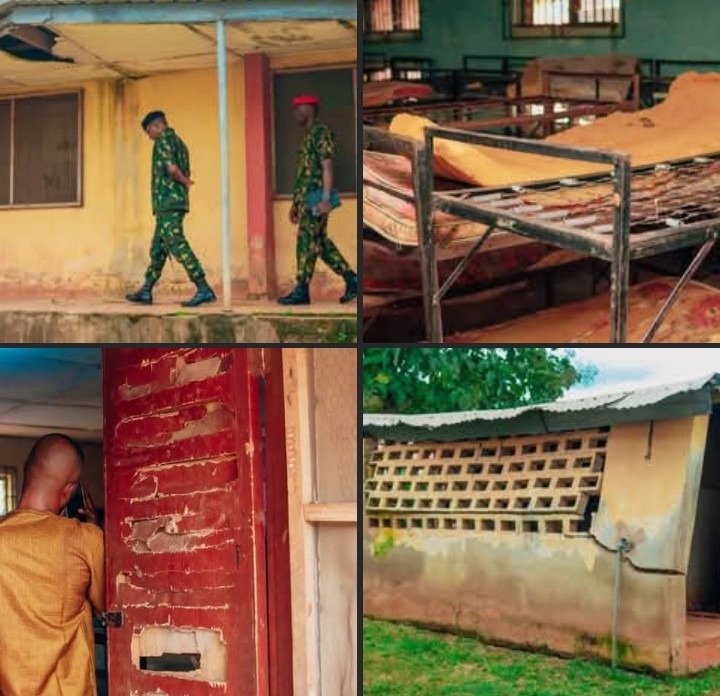

The Nigeria Security and Civil Defence Corps (NSCDC) has uncovered underground tunnels at a heavily fortified suspected drug hideout in Asaba, Delta State, raising concerns over possible links to other criminal activities, including kidnapping.
The discovery was made on Monday, October 12, by the command’s patrol team at Fallingwater Colehouse, Yahweh Close, off Akara Junction, along the 74 Junction–Asaba Specialist Hospital axis.
The NSCDC said its operatives struggled for three days to gain access to the building before using a blowtorch to breach the roof.
The command’s Public Relations Officer, DSC Anthony Akachukwu, said the operation exposed several layers of fortified iron doors and underground passages allegedly used by suspects to escape security operations.
According to him, the tunnels raised concerns about the possible use of the facility for criminal activities beyond the suspected drug trade.
Akachukwu disclosed that several suspects escaped during the operation, allegedly using the underground passages.
He, however, stressed that the command had yet to establish any connection between the facility and kidnapping, adding that investigations were ongoing.
Operatives reportedly recovered substances locally known as “Loud” and “Ice”, alongside PVC gum and other materials suspected to be connected to the drug trade. Some of the suspected operators allegedly escaped with part of the substances.
A man identified as Yakubu was arrested after allegedly arriving at the location to purchase drugs during the operation. Akachukwu said the man reportedly began negotiating with an operative he mistook for a worker at the suspected drug outlet.
The command said further arrests were expected as investigations continued.
In another development, investigators are examining a notebook reportedly recovered from the premises, which allegedly contained entries suggesting payments to security personnel.
The NSCDC has not identified any personnel or agencies allegedly mentioned in the document. The authenticity and contents of the notebook have not been independently established.
A resident, who requested anonymity for security reasons, claimed that suspicious movements around the property had persisted for years.
The resident, who said he had lived in the area for more than six years, alleged that customers could obtain substances through an opening in the structure without meeting the suppliers directly.
He also claimed that vehicles and young people frequently visited the area at unusual hours, including late at night.
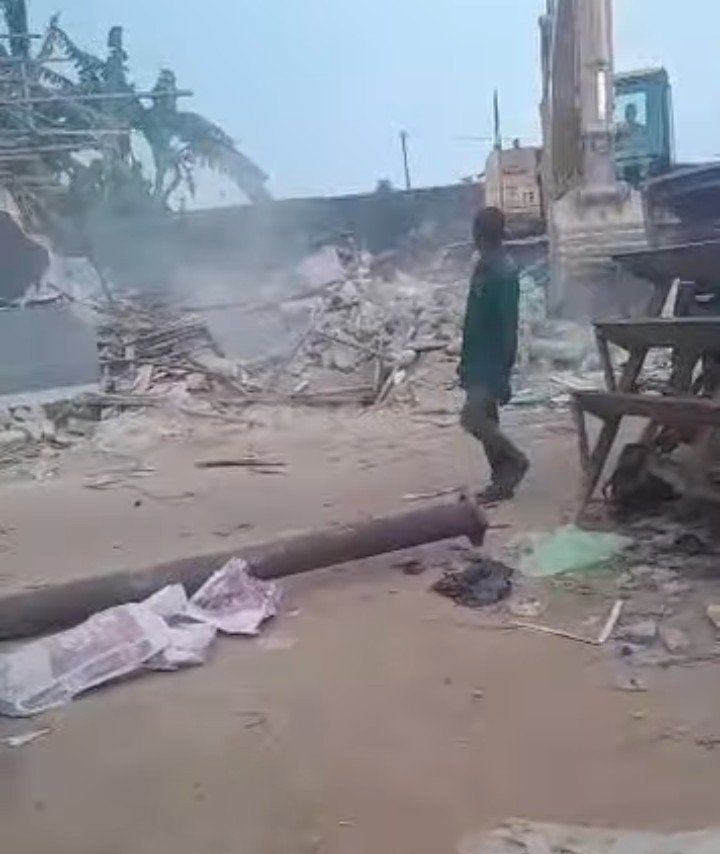
The resident urged the Delta State Government and security agencies to consider demolishing the structure and sealing the underground passages, arguing that arrests alone might not prevent the suspected operation from resuming.
Akachukwu said the command was investigating the ownership of the property but would not release details until the information had been verified.
He added that the location would remain under surveillance to prevent the suspected activities from continuing while efforts to apprehend fleeing suspects were underway.
The investigation is expected to establish who owns or controls the property, identify those allegedly involved in the suspected drug operation, determine the purpose of the tunnels and ascertain whether the facility was connected to other criminal activities.
All allegations, including the suspected kidnapping links and claims involving security personnel, remain subject to investigation and proof before a court of law.

About the Author
