


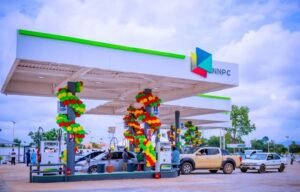
The Federal Government has defended the 30-day petrol discount introduced at Nigerian National Petroleum Company Limited (NNPC) Retail filling stations, insisting that the initiative does not amount to a return of the fuel subsidy regime abolished in 2023.
The Minister of Finance and Coordinating Minister of the Economy, Taiwo Oyedele, said the price reduction was being funded by NNPC Retail’s decision to reduce or temporarily forgo its profit margin rather than through payments from the Federal Government’s budget or the Federation Account.
Oyedele explained that the arrangement was a commercial decision intended to provide temporary relief to households, commuters and transport operators facing rising petrol prices.
According to him, NNPC Retail purchases petrol from the Dangote Refinery and other suppliers at prevailing market prices before adding its retail margin to determine the pump price.
Under the discount arrangement, the company reduces its margin and passes the savings to consumers.
The minister distinguished the arrangement from a fuel subsidy, which involves the government using public revenue to pay part of the cost of a product to reduce the price paid by consumers.
He maintained that the subsidy regime ended by the Tinubu administration in May 2023 would not be restored.
Oyedele also warned that selling crude oil belonging to the Federation below market prices could amount to a subsidy if the resulting financial shortfall were borne by public revenue.
The minister defended NNPC Retail’s decision to sacrifice part of its earnings, arguing that lower margins per litre could be offset by increased sales volumes and stronger customer loyalty.
He said the strategy could potentially improve the company’s overall profitability and sustain dividends paid to the Federation.
Addressing concerns that the discount could encourage petrol smuggling into neighbouring countries, Oyedele argued that the retail margin accounted for less than five per cent of the pump price.
He said reducing a margin of that size would be unlikely to significantly widen the price difference between Nigeria and neighbouring countries, where petrol prices were reportedly 20 to 40 per cent higher.
The minister further listed other measures being pursued by the Federal Government to ease the burden of fuel costs, including expanding compressed natural gas (CNG) transportation, granting tax and duty waivers on petrol, and removing illegal levies that contribute to transportation expenses.
The Presidency had earlier announced that NNPC Retail would forgo its retail profit margin and sell petrol at cost for an initial period of 30 days, with public transport operators receiving priority under the arrangement.
The initiative comes amid continuing concerns over high fuel prices and their effects on transportation costs, household spending and business operations.
Oyedele maintained that the discount was designed to provide temporary relief to consumers without returning the country to a government-funded fuel subsidy system.
About the Author
